
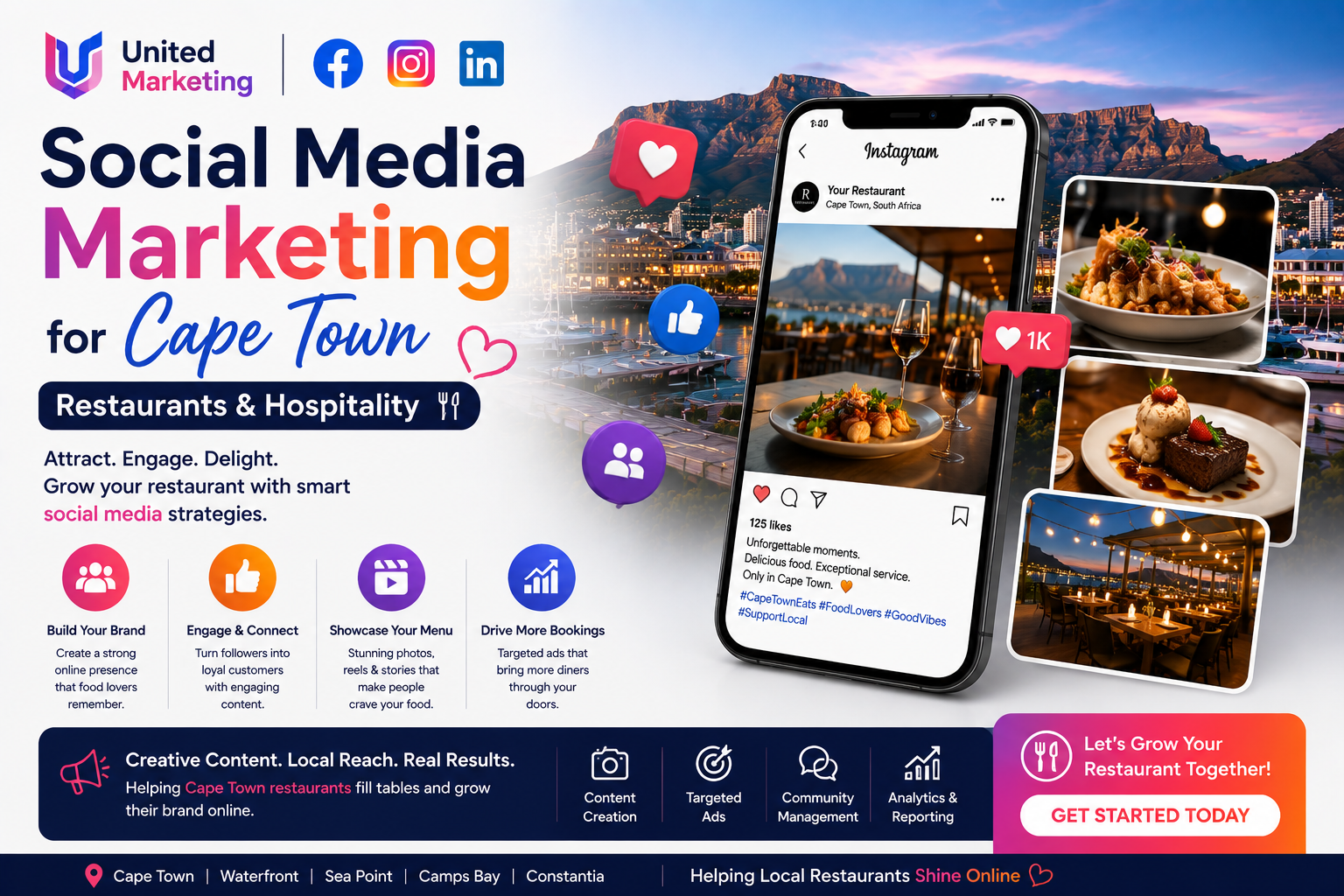
Cape Town’s restaurant and hospitality scene is one of the most competitive — and most social-media-active — in South Africa. From V&A Waterfront fine dining to Woodstock neighbourhood bistros and Camps Bay beachfront venues, Instagram and Facebook directly drive reservation decisions for Cape Town diners. This guide covers social media marketing specifically for Cape Town restaurants, bars, guesthouses, and hospitality businesses.
Why Social Media Is Non-Negotiable for Cape Town Hospitality
Cape Town diners, tourists, and hospitality seekers overwhelmingly discover new restaurants on Instagram before searching on Google. A beautiful Reel from a V&A restaurant or a stunning food photo from a Constantia wine estate can reach tens of thousands of Cape Town food lovers organically — without spending a rand on advertising. Social media is your most powerful and cost-effective marketing channel.
Platform Priority for Cape Town Restaurants
| Platform | Priority | Why It Works for CT Hospitality |
|---|---|---|
| #1 | Visual platform — food, ambiance, Cape Town setting performs exceptionally well | |
| #2 | Older demographic, event promotion, community groups, local recommendations | |
| TikTok | #3 | Growing fast — behind-the-scenes kitchen content, chef Reels perform strongly |
| Google Business Profile | Essential | Drives direct “restaurant near me” traffic — not social but must be maintained |
Content Strategy: What to Post for Cape Town Restaurants
1. Food Photography That Sells
Every Cape Town restaurant’s hero content is its food. Professional food photography — or high-quality smartphone shots with good natural light — should make up the core of your feed. Focus on hero dishes, seasonal specials, and the plating details that distinguish your restaurant. Cape Town’s abundant natural light makes it one of the best cities in the world for food photography.
2. Reels That Get Shared
- Kitchen prep and plating process videos — behind the scenes builds fascination
- Cape Town sunset/view shots from your venue with ambient audio
- Chef spotlight content — introduce the human behind the food
- Table setting and ambiance Reels — sell the full experience, not just the food
- Seasonal menu reveal videos — creates anticipation and urgency
3. User-Generated Content (UGC)
Cape Town diners love sharing their restaurant experiences on Instagram. Create conditions that encourage UGC: a photogenic corner of your venue, a branded hashtag displayed on menus and table cards, and proactive reposting of tagged content with permission. UGC is the most authentic social proof available to any Cape Town restaurant.
4. Seasonal Cape Town Content Calendar
| Season/Period | Content Opportunity |
|---|---|
| Dec–Feb (Summer) | Peak tourism — showcase Cape Town summer dining, sunset specials, tourist-friendly content |
| March–April | Wine harvest content for Winelands venues, autumn menu transitions |
| June–Aug (Winter) | Warm, cosy atmosphere content, winter menu specials, fireplace ambiance |
| September–October | Spring menu reveals, flower bloom settings, early summer preparation |
| Public Holidays | Heritage Day (24 Sep), Women’s Day — culturally relevant campaign content |
| Festive Season | Christmas, New Year’s Eve bookings — start promoting in October |
Paid Social for Cape Town Restaurants
Facebook and Instagram Ads targeting Cape Town foodies are highly cost-effective for driving reservations. Run event promotion ads for special evenings, retargeting ads for people who visited your website but didn’t book, and local awareness campaigns targeting Cape Town users interested in dining and food during peak tourist season.
Frequently Asked Questions (FAQs)
How often should a Cape Town restaurant post on Instagram?
Daily posting is ideal for Cape Town restaurants, as food content performs exceptionally well on Instagram and the platform rewards consistent activity. If posting every day isn’t practical, aim for at least five posts per week, including three to four Reels to maximise reach. Instagram Stories should be updated daily to keep your restaurant visible in followers’ feeds and showcase daily specials, behind-the-scenes moments, or customer experiences.
Is professional food photography worth the investment for a Cape Town restaurant?
Yes. Professional food photography is one of the highest-return marketing investments for most restaurants. High-quality images can be used across your website, Instagram, Facebook, Google Business Profile, menus, and advertising campaigns, providing months of valuable content from a single photo shoot. In Cape Town’s highly visual dining scene, professional imagery also helps create a premium first impression and encourages more bookings.
How can I use Instagram to generate restaurant reservations instead of just followers?
Focus on making it easy for potential customers to book. Include a clear reservation link in your Instagram bio, use booking calls-to-action in your captions, add booking link stickers to Instagram Stories, and run Instagram Ads with “Book Now” buttons linked directly to your reservation system. Enabling the Reserve button on your Facebook page and tracking where bookings originate can also help measure Instagram’s contribution to your business.
Should a Cape Town restaurant respond to every Instagram comment and direct message?
Yes. Aim to respond to all comments and direct messages within 24 hours, and ideally within 2–4 hours for reservation enquiries. Fast responses improve customer experience and can positively influence Instagram’s engagement signals. More importantly, potential diners who don’t receive timely replies are likely to book elsewhere, so treat Instagram messages with the same priority as phone calls or email enquiries.
How should I handle negative reviews or complaints on social media?
Respond promptly, professionally, and publicly on the platform where the complaint was made. Acknowledge the customer’s experience, thank them for their feedback, and invite them to continue the conversation privately via direct message or email to resolve the issue. Avoid arguing publicly or becoming defensive. A thoughtful, respectful response demonstrates excellent customer service and often builds more trust with future customers than the negative review harms.
